

A unique masterpiece from the golden age of painting
Skip the event ticket details and go to event summary.
When
Open days and Members-only days
Important information
Included in palace admission (Members go free)
Buy Banqueting House ticketsMarvel at the painted ceiling of the Banqueting House - the only surviving ceiling painting by Flemish artist, Sir Peter Paul Rubens, that can be viewed in its original position.
A celebrated artist, Rubens' paintings showcased a theatrical flair that made him the perfect choice for the Banqueting Hall.
The canvases were installed in the hall in 1636. The three main canvasses depict The Union of the Crowns, The Apotheosis of James I and VI and The Peaceful Reign of James I and VI.
The ceiling was commissioned by Charles I in 1629. It was one of the King's last sights before his execution on a scaffold outside the Banqueting Hall in 1649.
"I confess that I am, by natural instinct, better fitted to execute very large works than small curiosities."
Sir Peter Paul Rubens in a 1621 letter to James I and VI's agent
A measurement mishap
Rubens was not deterred by the large scale of his commission. Indeed, the ceiling canvasses are large - individually, two of them measure 28 x 20ft (approximately 9 x 6m) and two others measure 40 x 10ft (approximately 13 x 3m).
When the canvases were first unrolled on the floor, Rubens' assistants realised with mounting horror that they were too big to fit in the ceiling.
Although both Belgium and England measured in feet and inches, each country used a different length for a foot. Drastic moderations had to be made on site to make them fit.
It appears that Rubens never saw his works inside the Banqueting House. He wrote to a friend, "In as much as I have a horror of courts, I sent my work to England in the hands of someone else."
After an initial two-year delay, Rubens received £3,000 (the equivalent of £218,000 today) and a heavy gold chain as payment for his work.

Image: The Apotheosis of King James I and VI. Cherubs and angels surround the King, being carried to heaven as he looks upwards with tears in his eyes. © Historic Royal Palaces
What is the symbolism behind these paintings?
These vast paintings were designed to celebrate James I and VI’s reign and uphold the ‘divine right of kings’, which was championed by the Stuart monarchy.
Mythology and symbolism were used to convey important moments, from the King’s ascension to the throne to the Union of England and Scotland. When viewed from below, these larger-than-life scenes appear as if from the heavens.
Learn more about the symbolism used in the ceiling paintings on Google Arts and Culture.
View on Google Arts and CulturePreserving the ceiling
Follow our conservators as they examine Rubens' ceiling during conservation work completed in 2018 in this short film.
This content is hosted on YouTube
This content may be using cookies and other technologies for which we need your consent before loading. To view the content, you need to enable cookies for "Targeting Cookies & Other Technologies".
Explore what's on
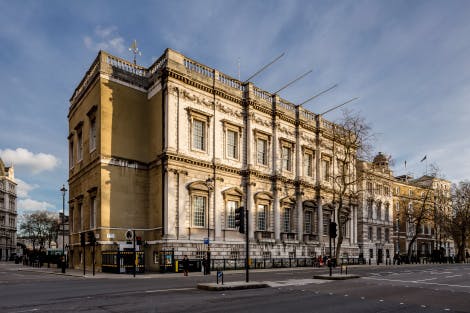
- Things to see
Charles I’s execution site
Walk in the footsteps of the condemned King and stand on the spot of Charles I's execution, just outside Banqueting House.
- Dates:
- Location: Banqueting House
- Ticket type: Included in palace admission (Members go free)

- Things to see
Banqueting Hall
Experience James I and VI's breathtaking Banqueting Hall, created in 1622 as a venue for extravagant Jacobean entertainments.
- Dates:
- Location: Banqueting House
- Ticket type: Included in palace admission (Members go free)

- Things to see
Inigo Jones' architecture
Find out what remains of Whitehall – known as one of the first examples of Palladianism in British architecture.
- Dates:
- Location: Banqueting House
- Ticket type: Included in palace admission (Members go free)
Browse more history and stories
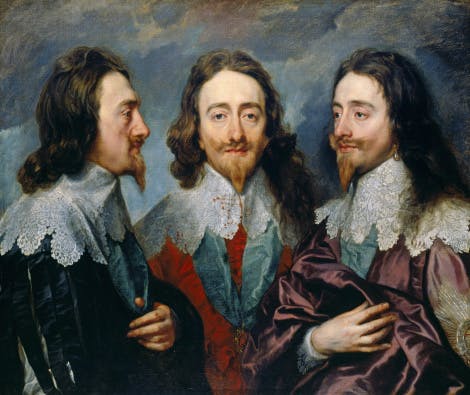
The execution of Charles I
Killing of a 'treasonous' King

The story of Banqueting House
Four hundred years of history and the site of a royal execution
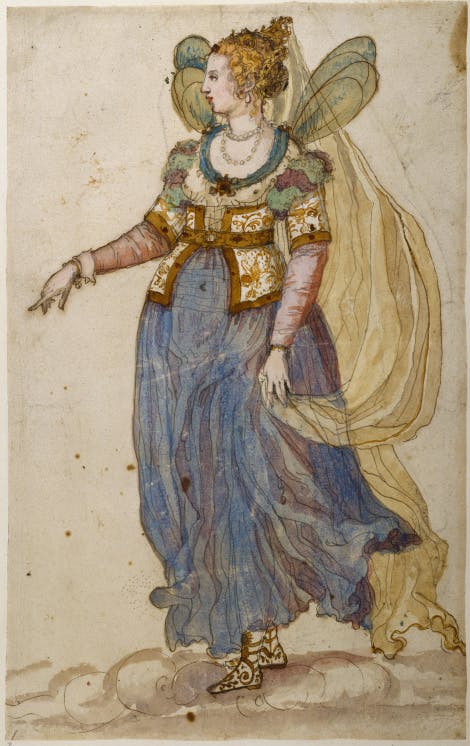
The masque
A fabulously extravagant early 17th century court entertainment
Shop online

Shop Banqueting House
Discover our wonderful collection of gifts and souvenirs inspired by Banqueting House.
From £4.50
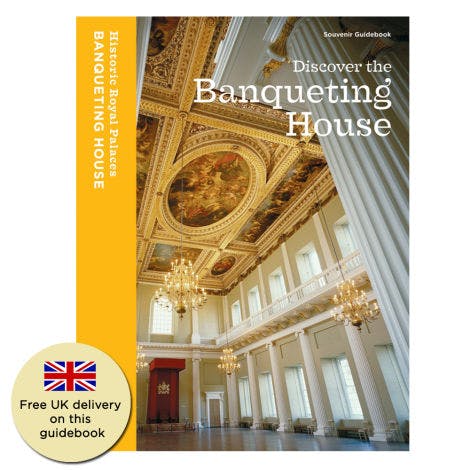
Official Banqueting House Guidebook
Descriptive, informative, authoritative - this superb guidebook is the best way to learn all there is about Banqueting House.
£4.99

Shop Homewares
Explore our collection of stylish home accessories and furnishings, including cushions, tapestries, glassware and much more.
From £3.50