
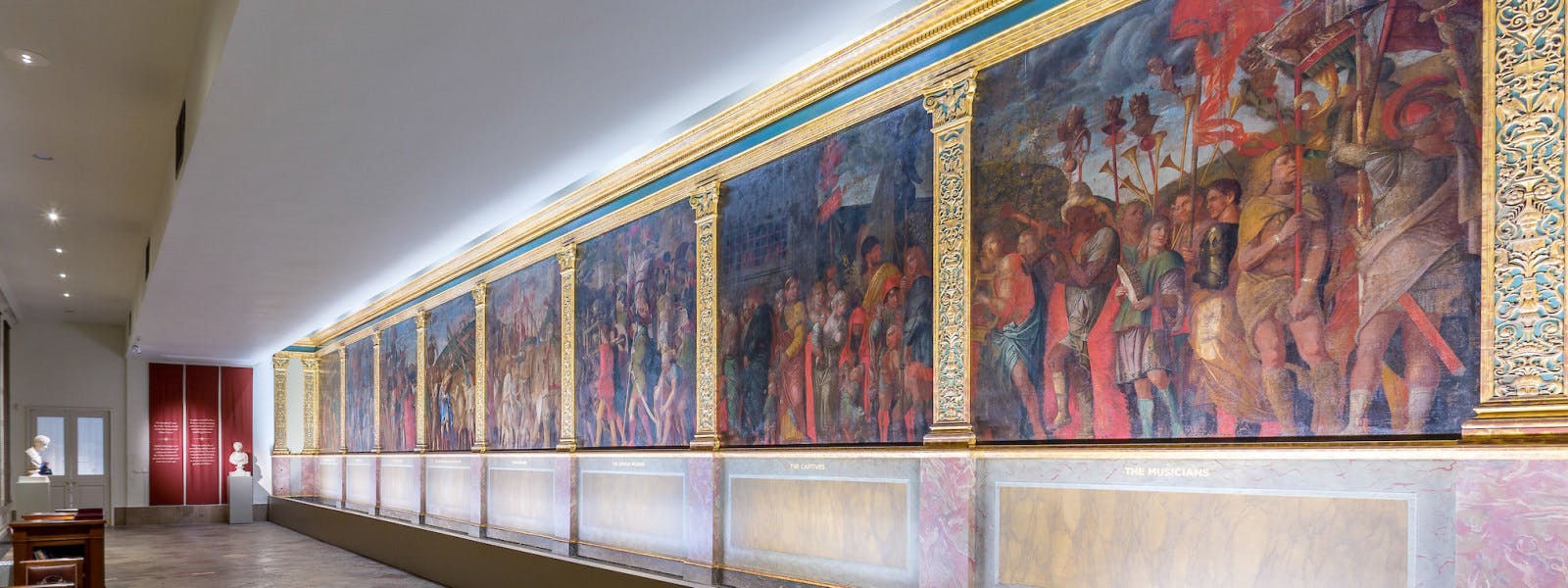
The Triumphs of Caesar – one of the great treasures of the Royal Collection
Skip the event ticket details and go to event summary.
When
Closed for maintenanceTicketing information
The Mantegna Gallery is closed for planned maintenance during 2026, and will reopen in Spring 2027.
Included in palace admission (Members go free)
Buy Hampton Court Palace ticketsThe Triumphs of Caesar
The Mantegna Gallery displays The Triumphs of Caesar. These are nine huge paintings that are amongst the finest achievements in Renaissance art. They were painted by Andrea Mantegna, one of the most famous and important artists of the early Italian Renaissance, for the Gonzaga family palace in Mantua, probably between 1485 and 1506. They were purchased by Charles I at the end of the 1620s and were brought to Hampton Court Palace.
The Mantegna Gallery is currently closed for planned maintenance work during 2026 and will reopen in Spring 2027.
Two of the nine paintings (the eighth and ninth canvases) that make up Mantegna's great artwork are on display in the Queen’s Presence Chamber (part of The Georgian Story) during this period.
The first six 'Triumphs' are on loan to the National Gallery.
The seventh canvas of the series is off-display, undertaking conservation work.
Image: Royal Collection Trust / © Her Majesty Queen Elizabeth II 2018
A Great Triumph
Charles I bought the entire Gonzaga art collection, including paintings by Titian, Caravaggio and Raphael, as well as Mantegna’s Triumphs, at the end of the 1620s. Soon after their arrival in England, the Triumphs were brought to Hampton Court Palace, which has remained their home ever since. They have been here for nearly 400 years.
The nine paintings show the ancient Roman ruler Julius Caesar on a triumphal chariot returning from his successful military campaigns. He is in a procession of Roman soldiers, standard-bearers, musicians and the spoils of war: captured weapons, artworks, gold and silver, prisoners, and exotic animals including elephants!
Ancient Rome was one of the strongest and richest empires in all of history. Later rulers, like Charles I, collected Roman sculpture and imagined themselves as Roman emperors.
Andrea Mantegna was a Renaissance artist whose paintings brought back to life the triumphs and glory of the ancient Roman world. The Triumphs of Caesar were described as ‘the best thing Mantegna ever painted’ by Giorgio Vasari in the 16th century, and they are still celebrated as masterpieces today.
Find out more about The Triumphs of Caesar on the Royal Collection Trust website.

"Hampton Court would be foolish without Mantegna."
Aubrey Beardsley, 1893
Explore what's on

- Things to see
Cumberland Art Gallery
Discover masterpieces by Rembrandt, Caravaggio, van Dyck, and more in the Cumberland Art Gallery.
-
Dates:
Open (Subject to short notice closures)
- Location: Hampton Court Palace
- Ticket type: Included in palace admission (Members go free)
- Things to see
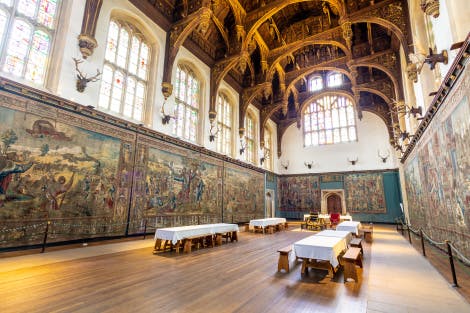
Great Hall
Experience the splendour of the Tudor court in Henry VIII's Great Hall, complete with his magnificent tapestries.
- Dates: Open
- Times: In line with palace opening hours
- Location: Hampton Court Palace
- Ticket type: Included in palace admission (Members go free)

- Things to see
William III's apartments
Enjoy the beautiful State Apartments and private rooms of William III at Hampton Court Palace as part of your visit.
-
Dates:
Open
- Times: In line with palace opening hours
- Location: Hampton Court Palace
- Ticket type: Included in palace admission (Members go free)
Browse more history and stories
The story of Hampton Court Palace
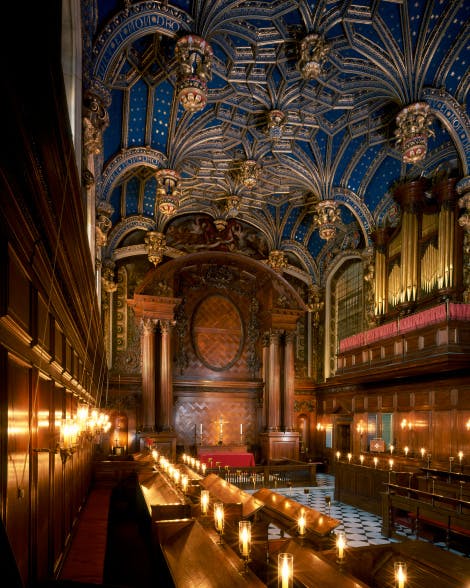
Home of Henry VIII and the Tudor dynasty
The gardens at Hampton Court Palace
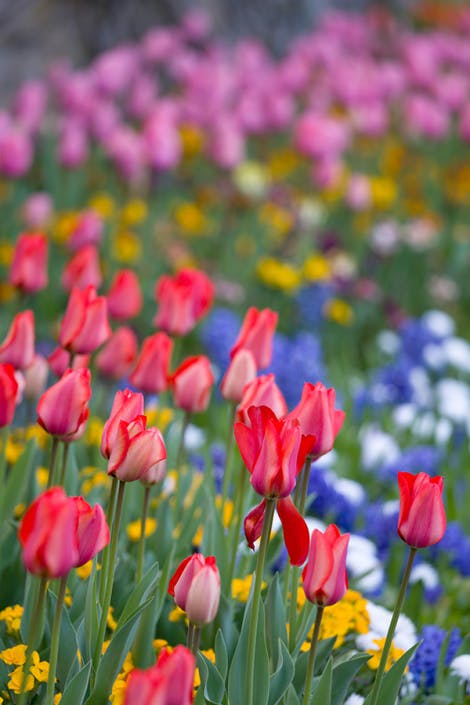
A brief history of the famous royal gardens

Hampton Court Conference of 1604
One of the most enduring aspects of James I's reign
Shop online
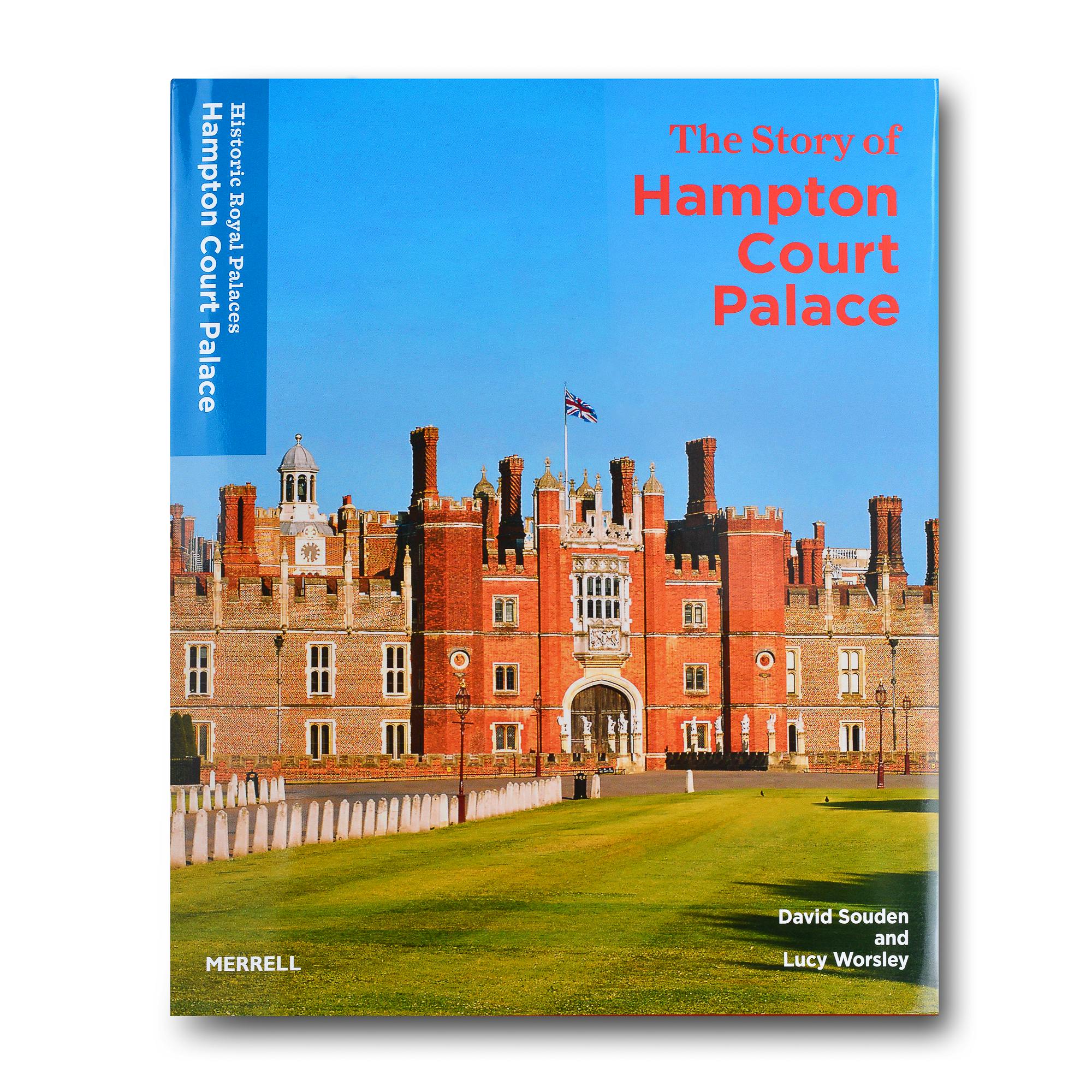
The Story of Hampton Court Palace
A fascinating, lavishly illustrated account of the world-renowned Hampton Court Palace.
£14.95