
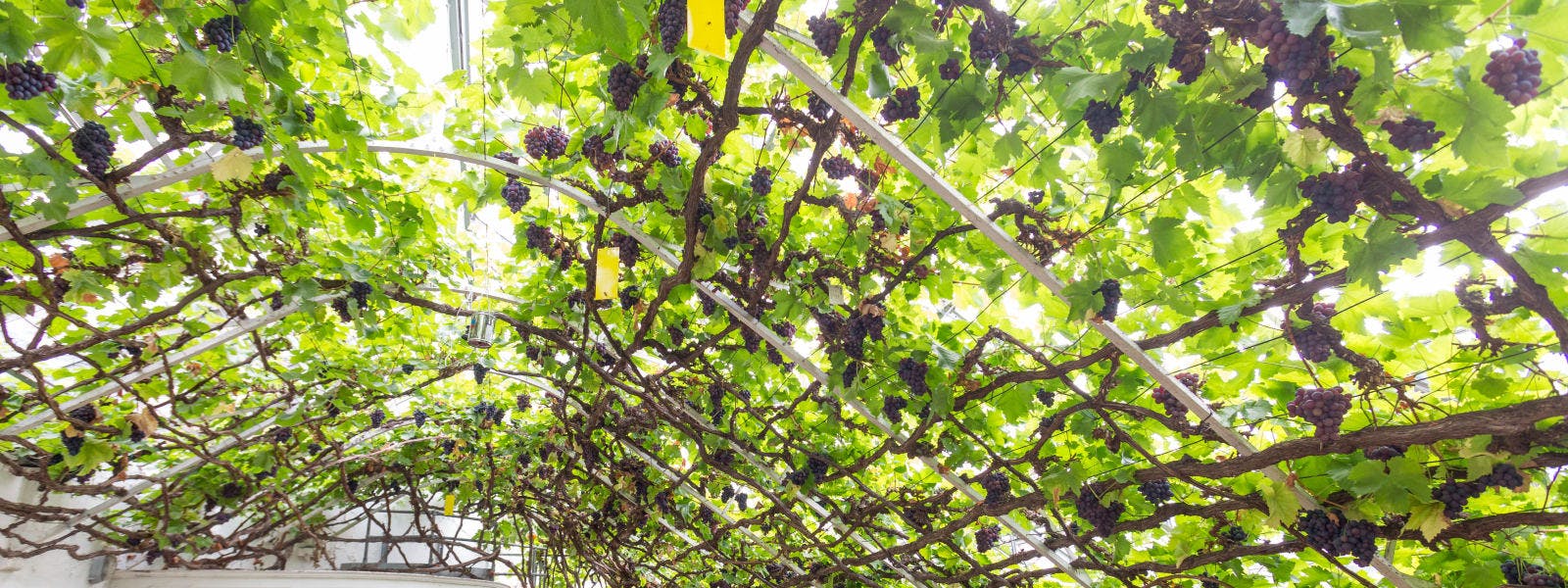
The largest grape vine in the world
Skip the event ticket details and go to event summary.
When
Open
In line with palace opening hoursTicketing information
Included in palace admission (Members go free)
Buy Hampton Court Palace ticketsThe Great Vine, Vitis vinifera 'Schiava Grossa' (synonym: Black Hamburg), is now 250 years old and is the largest grape vine in the world. It was planted in 1768 while Lancelot 'Capability' Brown was in charge of the gardens at Hampton Court.
Lancelot 'Capability' Brown directed the planting of the Great Vine from a cutting taken at Valentines Mansion in Essex.
In 1887 it was already 1.2 metres (4') around the base. It is now four metres (13') around the base and the longest rod is 36.5 metres (120').
The Vine is grown on the extension method where one plant fills a glasshouse, as Victorian gardeners thought this method would produce a larger crop.
The average crop of black dessert grapes is about 272 kilograms (600lbs), however in the autumn of 2001 it was 383 kilograms (845 lbs) - the best crop ever.
The history of the Great Vine
Queen Victoria had grapes from the Great Vine sent to the Royal Household at Windsor or to Osbourne House on the Isle of Wight. The decision to allow them to be sold to visitors was made by Edward VII, who decided the Royal Household no longer needed them. Later they were sold in small wicker baskets at St. Dunstans, the home for soldiers blinded in the First World War.
In the Second World War German P-O-Ws were given the task of thinning out the bunches of grapes.
The Vine grows on the site of the first greenhouse at Hampton Court. There have been five or six glasshouses on the site throughout its history.
In the early 1900s a three-quarter span wooden glasshouse was built which was a new shape and quite different from what existed before, as this one incorporated a viewing area for the public.
In 1969 a new glasshouse was needed. By that time, the Vine had become so entwined in the existing structure the only way forward was to build a new aluminium glasshouse over the old wooden one. The dormant vine was protected by polythene sheeting and the old glass and its supporting wooden frame was removed, leaving the iron framework of the 20th-century structure and the Vine in place.
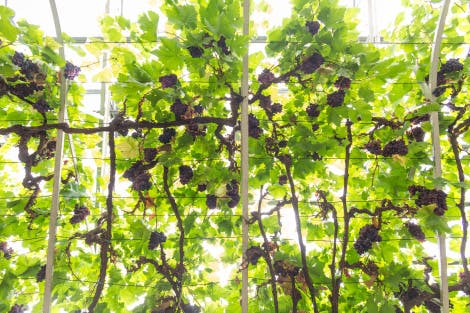
Cultivation of the Great Vine
In February the buds begin to break. A fertiliser is applied to the soil inside the glasshouse and the vine border outside. Once the new shoots are 2.5-5cm or so long, it is time for disbudding to reduce the number of new shoots. The remaining shoots grow until they are 30-45 cm (12"- 18") long. They then have their growing point pinched out and are tied in with raffia.
Immediately after flowering, the number of bunches are reduced and the remaining bunches are thinned. During the growing season the Vine is given liquid and foliar feeds. Later in the summer some leaf thinning is carried out to allow sunlight to fall upon the ripening fruit. In November and December when the plant is fully dormant, the fruiting spurs are pruned back to one or two buds.
Explore what's on

- Things to see
Hampton Court Gardens
Take time to explore and relax in these world-renowned gardens and find our free entry Garden Open Days dates.
- Dates: Open
- Times: In line with palace opening hours
- Location: Hampton Court Palace
- Ticket type: Included in palace admission (Members go free)

- Things to see
Kitchen Garden
Experience the recreated Kitchen Garden, which would have fed the Georgian royals and now supplies Henry VIII's Kitchens.
- Dates: Open
- Times: In line with palace opening hours
- Location: Hampton Court Palace
- Ticket type: Included in palace admission (Members go free)

- Things to see
Privy Garden
Explore the Privy Garden, now restored to its former glory and complete with its intricate Tijou Screen.
-
Dates:
Open (closes 16:00 on 26 September 2026)
- Times: In line with palace opening hours
- Location: Hampton Court Palace
- Ticket type: Included in palace admission (Members go free)
Browse more history and stories

William IV
The unexpected king, who lived in Bushy Park, near Hampton Court Palace and was married at Kew Palace

Henry VIII's lost Tudor gardens
Discover a vast, glittering complex of lost Tudor buildings

Tudor food and eating
Royal food and table manners at the Tudor court
Shop online
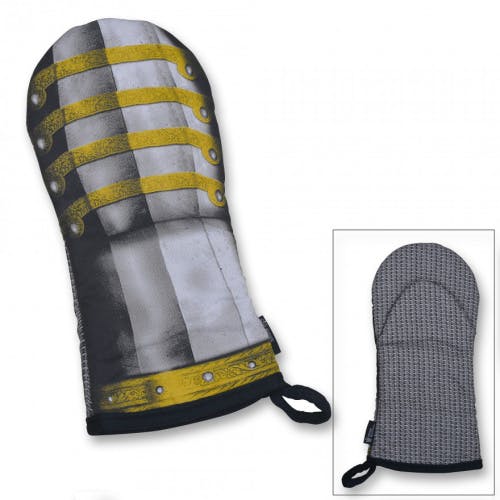
Henry VIII Gauntlet Armour Oven Glove
This fun oven glove is inspired by a suit of armour made for Henry VIII in 1540, currently on display at the Tower of London.
£18.00