
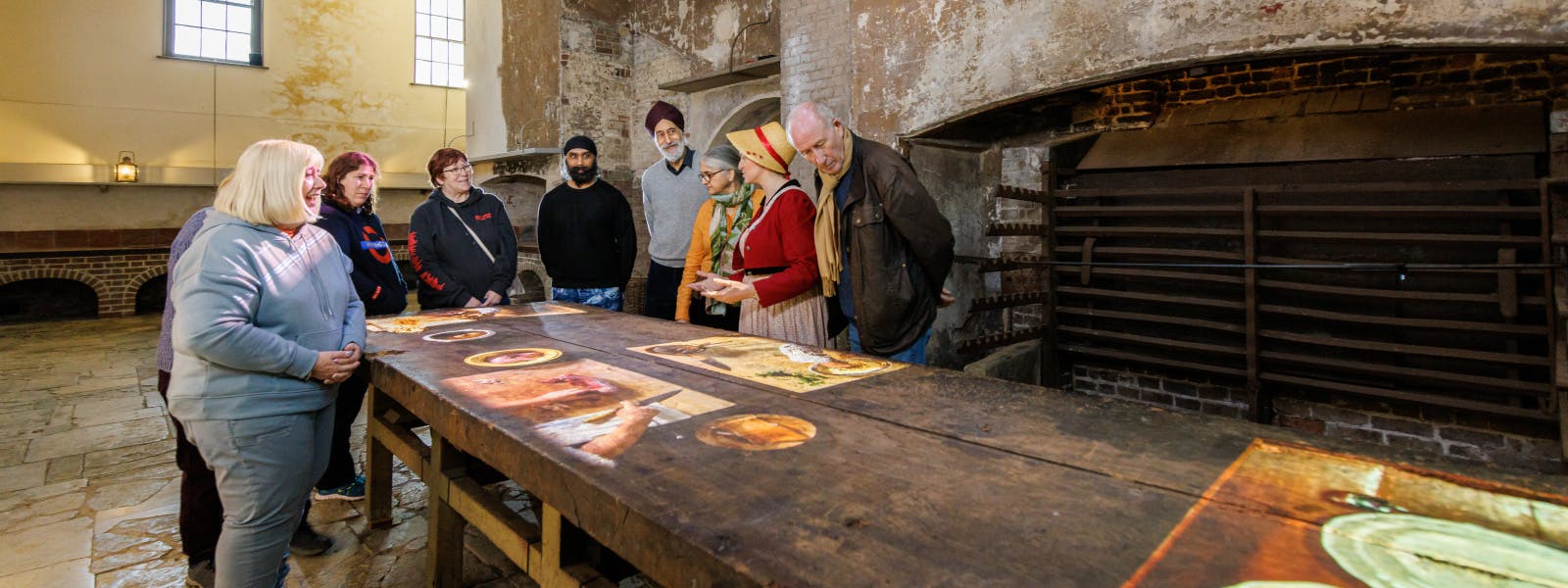
A preserved slice of life in the Georgian period
Skip the event ticket details and go to event summary.
When
Open
Where
Located in Kew Gardens, near Kew Palace.
Ticketing information
Included in Kew Gardens admission
Buy Kew Palace ticketsDiscover our weekend Georgian Kitchen Demonstrations on selected dates below.
The Royal Kitchens remain preserved as they were in the Georgian period 200 years ago, when they were last used. They are one of the few buildings surviving from the complex that served the now-demolished White House. They were built around 1734-5 for Frederick, Prince of Wales, father of George III.
As you explore the kitchens, it’s easy to imagine them at their height – humming with the noise of life as 20 people laboured to produce food for the royal family and their household.
By some quirk of fate, the kitchen survived when the White House was demolished. But when Queen Charlotte died at Kew in 1818, the officials of the royal household simply locked the door and departed. The kitchen was left untouched for nearly 200 years.
Today, the Royal Kitchens evoke life on 6 February 1789, when George III was given back his knife and fork after his first bout of mental illness.
Discover life 'below stairs' in a Georgian Royal Kitchen
Included in the staff were a master cook and an assistant, two yeomen, a groom, a turnbroach, a master scourer and his assistant, two boys and a child. They were assisted by a porter and a door keeper, with two coal porters and three men employed in the silver scullery. Covered dishes of food were taken from the kitchen by liveried servants who would arrange them all on the table for the diners to help themselves.
Together, this staff prepared and served vast quantities of food, including meat, poultry, vegetables and bread, to feed the royal family and their household:
- Over 5,000 lbs of meat was purchased every month.
- Pheasants, partridge, grouse and other game were often sent to the King by lords from their estates.
- Despite its expense, fish from both sea and river were served regularly. Oysters, shrimps, crayfish, prawns, crabs and lobster were also delivered.
- Much of the fruit and vegetables came from the estate at Kew and the King’s farm in Richmond.
- Bread was made in the bake house but pies, tarts and gateaux were often bought in.
- Over 700lbs of butter was used at Kew every month, which might be flavoured with anchovies, oysters or shrimps.
After the meal, scullery boys would spend hours scouring pots and pans with sand and soap.

George III's bath
In the Silver Scullery, used for storing and cleaning the silver tableware, you may be surprised to find a tin bath. This dates from the period when George was advised by his doctors to take warm baths for his health. A visitor to Kew Palace in 1821 was told that George III used to take his baths in the kitchen, to save his servants the bother of carrying the hot water further.

George III's tin bath in the Silver Scullery. © Historic Royal Palaces
Georgian Kitchen Demonstrations
On selected weekends throughout 2026, step inside the Royal Kitchens at Kew Palace and meet the Experimental Historians from our Historic Kitchens Team as they investigate real recipes from the reign of King George III.
Experience the taste of a Georgian summer
Summer might be heating up outside, but in the kitchens we’re exploring the refreshing tastes of a Georgian summer. Think spectacular salads, colourful confectionery, and early ice‑creams - and discover the surprising amount of skill, preparation, and ingenuity needed to create them long before fridges, freezers, or modern transport existed.
Explore where ingredients came from, how they were stored and prepared, and what it took to serve dishes fit for a royal household.
Our Historic Kitchens Team bring the past to life through hands‑on investigation of original historical texts and recipes. Their practical research helps us better understand the people who lived, worked, and visited our six remarkable palaces. Come along and watch history being rediscovered right in front of you.
Dates
20th and 21st June
25th and 26th July
15th and 16th August
Explore what's on

- Things to see
- Tours and talks
The Great Pagoda
See The Great Pagoda at Kew Palace, now returned to its 18th-century splendour.
-
Dates:
Open
- Times: 11:00 - 16:00
- Location: Kew Palace
- Ticket type: Separate ticket

- Things to see
Queen Charlotte's Cottage
Discover a queen's rustic country retreat in the grounds of Kew Palace with a visit to Queen Charlotte’s Cottage.
-
Dates:
Open
- Location: Kew Palace
- Ticket type: Included in Kew Gardens admission

- Things to see
Kitchen Garden
Wander through the edible Kitchen Garden at Kew - a veritable sanctuary for wildlife, created to serve the royal family when staying at Kew Palace.
-
Dates:
Open
- Location: Kew Palace
- Ticket type: Included in palace admission (Members go free)
Browse more history and stories

George III, the Complex King
Dutiful, intelligent and cultured, but cruelly labelled ‘mad’

Queen Charlotte
Wife of George III and mother to 15 children

The royal kitchens at Kew
The kitchens have survived, practically untouched
Shop online

Shop Food & Drink
Indulge in our scrumptious collection of chocolates, preserves, jams, biscuits, tea and the finest liqueurs.
From £4.50

Shop Georgians
Inspired by this time of elegance and enlightenment, our Georgian collection features books, luxury gifts, exquisite jewellery and more.
From £5.00

Shop Kew Palace
Explore our exquisite collection of luxury gifts, souvenirs and homewares inspired by Kew Palace and its rich history.
From £4.50