

An elegant retreat for Britain's royal family for over three centuries
Kensington Palace was once a small and suburban villa, known as Nottingham House. New monarchs William III and Mary II chose this modest mansion in 1689 to be their country retreat. Over the years, Stuart and Georgian monarchs transformed the palace into a fashionable home for Britain’s young royal families.
Queen Caroline shaped the palace and gardens, and Queen Victoria spent her childhood here. She left to live in Buckingham Palace in 1837. Kensington later became home for minor royals, including her daughter, the talented sculptor Princess Louise.
More recently, the palace has been home to Diana, Princess of Wales, and Princess Margaret. It is also the official London residence of TRH The Prince and Princess of Wales and their children.
Read more: The Dress Codes of Diana, Princess of Wales

Image: Mary II, who together with her husband William III transformed Nottingham House into a palace. © Historic Royal Palaces
William and Mary transform Nottingham House
Newly-crowned monarchs William III and Mary II were first based in Whitehall Palace, in the heart of London. However, the smoke and damp of the city, and long travelling time to their more rural home at Hampton Court spurred them to search for a new home with easy access to Parliament.
In 1689, the King and Queen commissioned Sir Christopher Wren to draw up plans, but the Queen herself, excited by the project, took charge of the project to transform this little house into a palace.
Enthusiastic Mary made regular visits to check on progress and to hurry the work along. While a huge workforce was labouring with the building, a team of designers were already preparing decorative schemes for the new rooms.
However, Mary’s urging on the workmen had disastrous consequences. In November 1689 part of a newly-built wall collapsed. One man was killed and others badly injured. It happened minutes after the Queen had toured the site. A shaken Mary wrote to her husband of the incident: 'It shewed me the hand of God plainly in it, and I was truly humbled'.
Despite the setback, the palace was soon finished, and the King and Queen moved in on Christmas Eve 1689.

Image: The Drawing Room was the focal point of court life where the king would meet members of the court, dressed in their finery. © Historic Royal Palaces / David Jensen
The party palace
William and Mary began an era of magnificent balls in a golden three-year period, beginning in 1691. They used their new ornate rooms, elegant staircases and impressive halls to great effect. Guests ate, drank, gambled and flirted until dawn.
Once or twice a week the King and Queen held Drawing Rooms, where they mingled with distinguished visitors such as ambassadors or foreign princes.
Saturday night last was a great entertynment made for the Prince of Baden at Kensington, where was dancing and gaming... and a great supper and a banquet of sweetmeats... there could not be less than 1000 persons.
A guest at one of William and Mary’s balls
William alone
When his beloved Mary died from smallpox in 1694, William lost his enthusiasm for these grand entertainments and instead held more sedate evenings and concerts. Despite his grief, the King finished the building with a grand gallery range to the south of the palace, enlarging Sir Christopher Wren's original plan.
William III died in 1702 after catching a fatal chill in the King's Gallery at Kensington Palace. He had been injured in a horse riding accident days earlier at Hampton Court Palace.
Did you know?
The gallery was originally hung with green velvet, and William would meet his spies and plan his military campaigns here.
Read more: William III and Mary II

Image: Queen Anne. © Historic Royal Palaces
Kensington under Queen Anne
The next monarch, Mary's sister Queen Anne flitted from palace to palace, in between bouts of ill health and 17 pregnancies. Sadly, none of her children lived to succeed her.
As reigning queen, Anne used the King's Apartments at Kensington Palace, while her husband Prince George of Denmark used the Queen’s Apartments.
The Queen spent little time at Kensington, preferring Hampton Court Palace, as she enjoyed hunting there in the extensive palace grounds.
Reigning for such a short time the Queen was not a great builder, but she contributed much to the design of the gardens.
Queen Anne's Orangery
At Kensington in the summer of 1704, Anne conceived of a new ‘greenhouse’ with a terrace where she could grow trees and exotic plants in ceramic pots.
Her most extravagant gesture at Kensington is one of London’s most beautiful and perfectly formed buildings.
Anne commissioned architects Sir Christopher Wren and Nicholas Hawksmoor to design an orangery which became far more than a greenhouse.
Young ‘upstart’ architect John Vanbrugh added details of his own. Inside, Grinling Gibbons carvings and elegant pillars created an airy and delightful space.
The Queen loved her Orangery, finished in 1705, and used it to host summer parties at Kensington.
Did you know?
Anne used the Orangery for the traditional Easter ceremony of distributing money to her deserving subjects.
Read more: Queen Anne

Image: The Orangery at Kensington Palace, commissioned by Queen Anne. © Historic Royal Palaces
The arrival of the Georgians
When George I succeeded to the throne, he found Kensington Palace 'very agreeable'. Under George's patronage, the palace was adorned and enlarged by the upcoming artist, designer and architect William Kent.
Kent filled it with art and fine furniture, which gave it the refined 18th-century appearance that many of the grand rooms retain today.
The King's Staircase
William Kent’s most lasting achievement at Kensington Palace was his painted interiors. The spectacular King’s Staircase features life-size characters from George I’s court.
Among them are:
- Peter 'the Wild Boy' from Hanover, a boy in his early teens who had been found in German woods and brought to England.
- Mehmet von Königstreu, an Ottoman gentleman at George I’s Court, his wife Marie and his compatriot Mustapha.
- Dr John Arbuthnot, Queen Anne’s favourite physician.

Image: The King's Staircase at Kensington Palace. © Historic Royal Palaces
The palace under George II and Queen Caroline
George II and Queen Caroline enjoyed hosting a far livelier court in these elaborately painted spaces.
George and Caroline invigorated court life at Kensington Palace, hosting lavish receptions and leading society life with sparkle. Caroline held intellectual salons, where the brightest minds in arts and sciences gathered. She also helped shape the design of the palace gardens.
A court in decline
After Queen Caroline’s death in 1737, court life fell into a dull, predictable routine, with old courtiers described as ‘flies in the autumn, sunning themselves at a window, past even buzzing’ waiting for the hurricane of a new reign to sweep them all away.
When George II died of a heart attack in 1760, no reigning monarch then slept within the palace walls for almost 70 years. His grandson, George III, disliked the palace and never stayed there.

Image: Victoire, Duchess of Kent with Princess Victoria (after Beechey) c1824. The infant Victoria holds a miniature portrait of her late father. Royal Collection Trust/© Her Majesty Queen Elizabeth II 2017.
Queen Victoria's childhood at Kensington Palace
George III granted apartments to other family members of the royal family as he didn’t wish to live at Kensington himself.
Among them was his fourth son Edward, Duke of Kent. His wife German duchess, Victoire, gave birth to the future Queen Victoria at Kensington Palace in 1819. The baby was christened Alexandrina Victoria, and baptised in the splendour of the Cupola Room.
Edward died eight months later, leaving the Duchess to raise Victoria alone. The Duchess of Kent did her best to educate and protect the girl who might one day become queen.
Victoria was educated almost entirely in her rooms at Kensington Palace, which can still be seen today. Her daily programme of lessons, known as the ‘Kensington System’ was judged by some to be harsh.
Frequent trips to the theatre, daily rides in the gardens and her favourite dog Dash punctuated Victoria's early days.
However, Victoria saw virtually no other children and was kept away from life at court.
Later in her life, the Queen later recalled a childhood full of ‘painful and disagreeable’ scenes, but she also enjoyed life at Kensington.

Image: The First Council of Queen Victoria, by David Wilkie, 1838, Royal Collection Trust/© Her Majesty Queen Elizabeth II 2017.
Victoria becomes Queen
On the morning of 20 June 1837, Princess Victoria woke up to be told that the King had died and that she was now Queen. She was just 18 years old.
She held her first Privy Council meeting that day in the Red Saloon at Kensington Palace. A few weeks later, she departed for Buckingham Palace, admitting she would miss ‘poor old palace’.
This famous painting of Victoria at her first Privy Council meeting still hangs at Kensington Palace. It portrays Victoria as very composed, a few hours after she had become Queen.
As her uncle William IV had just died, Victoria would have been wearing a black mourning dress. However, the artist depicted her in white so that she stood out.
Read more: Queen Victoria
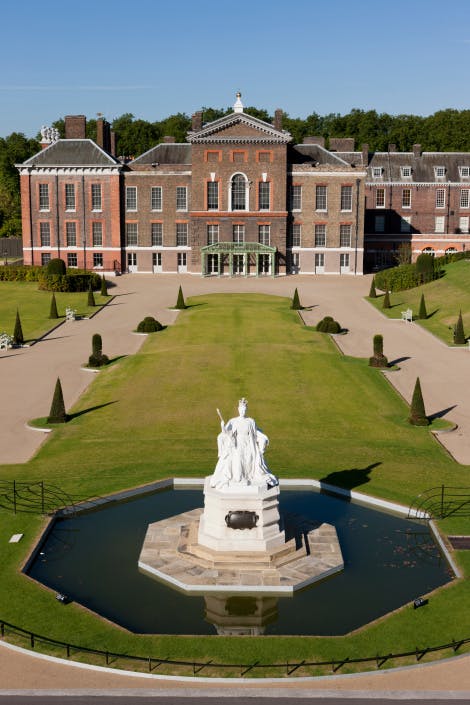
Image: The East Front. © Historic Royal Palaces
Kensington Palace: the 'Aunt Heap'
After Victoria left for Buckingham Palace, Kensington took on a new quiet life as a royal ‘dormitory’. It was home to several minor members of the royal family.
As well as her eccentric uncle, the Duke of Sussex, Queen Victoria lodged two of her daughters here - Princess Beatrice and Princess Louise, a talented sculptor.
Louise designed the iconic statue of Queen Victoria on the West Front and it was unveiled in 1893 to celebrate Victoria’s Golden Jubilee.
In 1899, Victoria opened the State Apartments to the public. This pattern of continued through the 1900s as parts of the palace remained open to the public while members of the royal family and loyal staff occupied the numerous private apartments.
As the royal inhabitants aged, the palace became known as the ‘Aunt Heap’.
Modern royals
After the war, with the old Victorian princesses long departed, a new generation of modern royals took centre stage at Kensington Palace.
Princess Margaret and Lord Snowdon lived at Kensington Palace with their young family from the 1960s. The couple created fashionable interiors and hosted many parties for celebrity guests, pop stars and artists here.
The Prince and Princess of Wales lived at Kensington after their wedding in 1981. Their sons, Prince William and Prince Harry, grew up there.
Did you know?
In 1940, The Luftwaffe dropped incendiary bombs on Kensington, badly damaging the State Apartments.

The Dress Codes of Diana, Princess of Wales
Diana, Princess of Wales's fashion was celebrated in her lifetime, and is now iconic. Through the words of four of her designers, and the extraordinary pieces in the Royal Ceremonial Dress Collection, we can trace her style journey.
Kensington Palace today
Kensington Palace remains home to members of the royal family, including TRH The Prince and Princess of Wales and their children. Kensington Palace was also the first marital home of The Duke and Duchess of Sussex.
In 2012, Historic Royal Palaces completed major refurbishments at Kensington. It was officially reopened by Queen Elizabeth II. With a grand new entrance and new gardens that echo 18th-century designs, Kensington Palace has been restored to the prominence of its heyday.

Image: The Prince and Princess of Wales and the Duke of Sussex (then The Duke and Duchess of Cambridge and Prince Harry) visited the White Garden at Kensington Palace in 2017. The garden was planted in tribute to their mother, Diana, Princess of Wales. They were given a tour of the garden by Head Gardener, Sean Harkin, and Operations Manager, Graham Dillamore. © Historic Royal Palaces
Discover more stories from Kensington Palace

Margaret and Moreno
Explore the exquisite dresses by renowned Filipino designer Josey 'Pitoy' Moreno, famously worn by Princess Margaret. A fascinating story of global royal style, Filipino history and national identity.

Modern Royals
As well as being a popular visitor destination, Kensington Palace is the official London residence of TRH The Prince and Princess of Wales and their children.
Listen to the podcast
In this episode we’ll follow Chief Curator Lucy Worsley, into the pomp of Kensington Palace, to a staircase that has a lot more to reveal about the Georgian court than you would think. This is part of a mini-series, exploring a selection of treasured spaces in our palaces with the curators who know them best.
More episodesPodcast transcript
Browse more history and stories

Mehmet von Königstreu
An Ottoman gentleman at George I’s Court
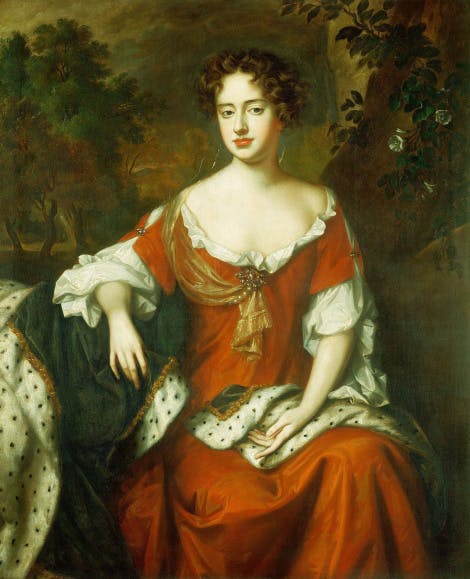
Queen Anne
A surprisingly successful monarch, despite ill health and tragedy
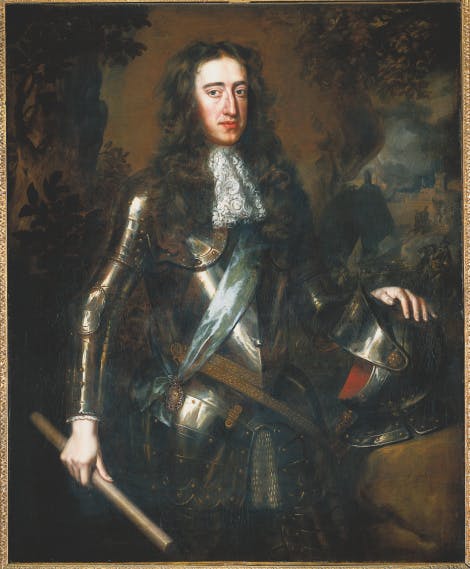
William III and Mary II
England's only joint sovereigns, who transformed Kensington Palace into a royal residence
Explore what's on

- Things to see
The King's State Apartments
Wander through the lavish rooms of the King's State Apartments, each one grander than the last, at Kensington Palace.
- Dates: Open
- Times: In line with palace opening hours
- Location: Kensington Palace
- Ticket type: Included in palace admission (Members go free)

- Things to see
Victoria: A Royal Childhood
Discover the story of Princess Victoria, the young girl destined to be queen, in the rooms where she was born and raised at Kensington Palace.
-
Dates:
Open
- Times: In line with palace opening hours
- Location: Kensington Palace
- Ticket type: Included in palace admission (Members go free)
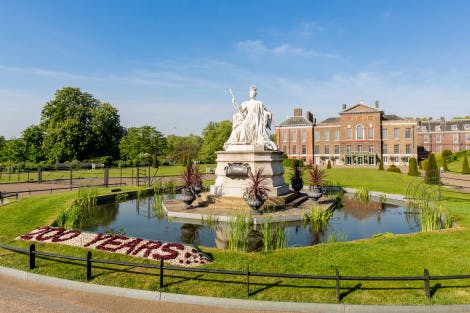
- Things to see
The Palace Gardens
Walk in the footsteps of royalty in the beautiful Kensington Palace gardens.
-
Dates:
Open
- Times: 10:00 - 18:00. Last entry 17:45.
- Location: Kensington Palace
- Ticket type: Free
Shop online

Percy & Reed’s Royal Blossom Range
Created in collaboration with Historic Royal Palaces, Percy & Reed’s Royal Blossom range will have you feeling like royalty from head to toe.
£40

Courtiers: The Secret History of Kensington Palace
Told through the eyes of a courtier, this fascinating book explores the ambitious and talented people who flocked to the Georgian court in search of power and prestige.
£12.99
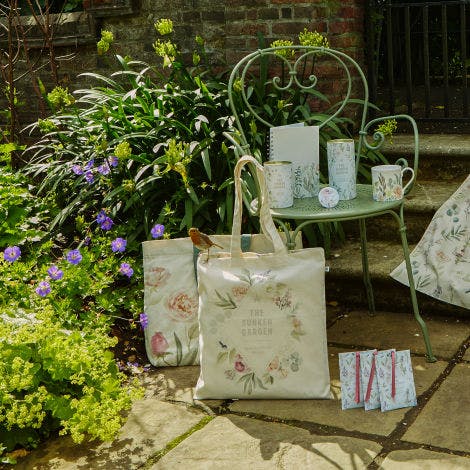
Shop Sunken Garden Range
Exclusive to Historic Royal Palaces, this beautiful collection features a delicate watercolour floral print from the Sunken Garden at Kensington Palace.
From £2.50