
The Tower was home to a collection of 'wild beasts' for over 600 years
The first zoo in London
From the 1200s to 1835, the Tower of London housed a collection of exotic wild animals, never before seen in London, including lions and a polar bear given as gifts to kings and queens. This collection is known as a menagerie.
The Royal Menagerie at the Tower of London is known as the ‘first zoo in London’. When it closed, many Tower animals were moved to the Zoological Gardens in Regent’s Park – today's London Zoo.
What type of animals were kept at the Tower?
In 1235, Henry III was delighted to be presented with three 'leopards' (probably lions but referred to then as leopards in the heraldry on the king's shield) by the Holy Roman Emperor Frederick II. These inspired the King to start a zoo at the Tower of London. Over time the collection of animals grew: the lions were joined by a polar bear in 1252 and an African elephant in 1255.

Image: © Historic Royal Palaces
The polar bear
In 1252, Henry III was given a magnificent white bear, presumably a polar bear, by the King of Norway. Although it was kept muzzled and chained, the bear was allowed to swim and hunt for fish in the Thames. A collar and a ‘stout cord’ were attached to the bear to keep it from escaping.

Image: © Historic Royal Palaces
The elephant
The King of France sent an elephant to the Tower in 1255, and Londoners flocked ‘to see the novel sight’. Although the elephant had a brand new 40-foot by 20-foot elephant house and a dedicated keeper, it died after just a couple of years.
Many of the other animals did not survive in the cramped conditions, although lions and tigers fared better, with many cubs being born.

Image: © Historic Royal Palaces
Lions at the Tower
In the 1200s, Edward I created a permanent new home for the Menagerie at the western entrance to the Tower. This became known as the Lion Tower. The terrifying sounds and smells of the animals must have both impressed and intimidated visitors.
Henry III’s crest featured three lions, the ancestors of those on the England football team strip today.
By 1622, the collection had grown to include three eagles, two pumas, a tiger and a jackal, as well as more lions and leopards – the main attractions.
James I had the lions’ den refurbished so that visitors could see more of the lions prowling around their circular yard. This included a ‘great cisterne... for the Lyons to drink and wash themselfes in’.
In later centuries some animals took their revenge on those who got too close, maiming and even occasionally killing keepers and visitors.

Image: This painting by George Stubbs is inspired by an incident that took place in 1764, when a cheetah brought to England from India was pitched against a stag in a hunting demonstration at Windsor. Manchester Art Gallery
The Royal Menagerie and Empire
For most of the Tower Menagerie’s history, exotic animals were very rare in England because only monarchs and the elite could afford to keep them.
From the 1700s many more exotic creatures arrived in London as a direct result of Britain’s expanding military and trading empire across the globe. Miss Jenny, the Tower’s cheetah, arrived in 1764 from Bengal. Jenny was attended by an Indian keeper known as John Morgan who appears in the records of the Old Bailey stating: 'I came over with a tyger [cheetah] for Sir George Pigot, who was governor of Madras, and attend upon it for him now.'
Throughout this period, experienced keepers like Morgan often taught animal handlers at the Tower how to train animals in the Menagerie.

Image: © Historic Royal Palaces
Global journeys
Animals at the Tower had usually travelled here from around the globe. George, the Tower’s Bengal lion, was orphaned in 1822 when Colonel Sir James Watson, commander in chief of India, shot the cub’s parents whilst big game hunting.
The cub was put on an East Indiaman ship, the Hope, with a goat as a foster mother at three days old. George’s journey from Bengal to Gravesend took four months and on arrival, he was so tame that visitors to the Tower could play with him.
Birds, beasts, reptiles, in endless variety, press on the spectator’s view and lead him through the labyrinth of wonderment superior to any ever before exhibited.
The Times newspaper in 1827
The last Keeper of the Menagerie
By the beginning of the 1800s, the Tower Menagerie was in decline. It was temporarily revitalised by energetic showman and Head Keeper Alfred Cops, who acquired nearly 300 new animals and rekindled the popularity of the Tower as a tourist attraction.
Who was Alfred Cops?
Alfred Cops was 29 when he was appointed as the last Keeper of the Menagerie in 1822.
His recruitment was a radical departure from previous recruits. Previous Keepers had little experience and included a portrait painter, the British ambassador to Morrocco, and the House Steward to former Prime Minister William Pitt.
By contrast, Cops possessed invaluable experience from his former job at a rival attraction – London’s Exeter Exchange menagerie.
Born into a working-class family in Whitechapel in east London (near the Tower), Cops began his career at the Exeter Exchange as a teenager in the 1810s where lions, tigers, monkeys, kangaroos, beavers, reptiles and birds were displayed in iron cages.
The dangers of animal captivity
At Exeter Exchange Cops taught Chunee, an Indian elephant, to perform tricks that delighted visitors. However, training wild animals in such harsh conditions had dire consequences.
Chunee attacked Cops at least once and, four years after his departure, an increasingly aggressive Chunee was shot and killed by soldiers in a widely publicised gory episode. This cruel treatment reflected 19th-century attitudes towards animal welfare.
A short-lived success
When Cops took the position of Keeper at the Tower of London, there were only eight animals left and the Menagerie was seen as ‘small, ill-contrived, and dirty… the animals look sick and melancholy.’
Cops set about reviving the menagerie’s fortunes and, over the next decade, he filled up the dismally depleted zoo. The menagerie guide of 1830 lists 58 species of mammals, birds and reptiles, and the Tower saw an ‘unprecedented’ number of visitors that year.
But Cops’ success was short-lived.
Why did the Tower Menagerie close?
The Duke of Wellington puts the boot in
In 1826, a new Constable of the Tower arrived: Arthur Wellesley, Duke of Wellington and military hero of Waterloo. Wellington saw the Tower as a ‘Royal fortress not a public exhibition’. In an era of widespread fear of revolutionary unrest, thronging crowds of tourists were a distraction and potential threat. Wellington was supported by King William IV, who had far less interest in the animals than his ‘menagerie mad’ predecessor and brother, George IV.
The first animal rights act
There was also an increasingly vocal anti-animal cruelty lobby who objected to keeping animals in cramped cages. The first animal rights act was passed by Parliament in 1822 and in 1824 the RSPCA was founded. Naturalists were aware that captive animals should be kept, as far as possible, in their natural state.
The London Zoological Society (ZSL) opens
Crucially,the Royal Menagerie now had a more suitable home. The London Zoological Society (ZSL) was founded in 1826 as a scientific research institute, in contrast to the Tower Menagerie’s public spectacle. Wellington himself opened the expansive ZSL grounds in Regent’s Park in 1828 and, two years later, William IV presented them with his Windsor-based Royal menagerie.
Closure of the Tower Menagerie
The menagerie meets its Waterloo
With the tide turning against the Tower menagerie, a high-profile incident proved the final straw.
In 1830, keeper carelessness allowed two Bengal tigers to attack and kill a lion. Heated iron rods were applied to the animals’ mouths to tear them apart.
In 1831, King William IV ordered the Royal Menagerie out of the Tower.
The Secretary [should] arrange with Mr Cops respecting the removal of the animals to the Society’s Gardens.
ZSL Council minutes from 21 December 1831
Animals leave the Tower of London
The animals in the Tower Menagerie immediately began their transfer from the Thames through London’s freezing winter streets, north to Regent’s Park.
Alexander Miller, ZSL’s Head Keeper, lists the first deliveries ‘from the Tower Presented by His Majesty’ on 30 December 1831 including:
- 2 lions
- 2 leopards
- 1 Bonnobo monkey
- 1 Rhesus monkey
- 1 black lemur
Cops’ private animal collection
Cops exhibited a small number of his own animals at the Tower of London for three years, and reduced the entry price. However, more incidents followed, including a wolf escape and a monkey biting a soldier in the leg.
Wellington’s patience ran out. He declared ‘the King is determined that the wild Beasts shall not be kept there [at the Tower of London].’
Cops complied and closed the exhibition the next day. By October 1835, the remaining menagerie animals were sold to zoos or travelling circuses, and the Lion Tower was later demolished.
However, Cops’ position as Keeper was granted for life. 20 years after the royal animals left, Alfred remained at the Tower, where he lived with his daughter Sarah, and her two children.
The Tower Menagerie’s legacy
After six centuries as living symbols of royal power and empire, exotic animals would never be housed in the Tower of London again.
For hundreds of years, they had symbolised royal power and Britain’s expanding empire. But by the time the Menagerie closed, the animals that once entertained visitors were now seen as both a threat to public safety and victims of inhuman conditions.
Wire sculptures at the Tower
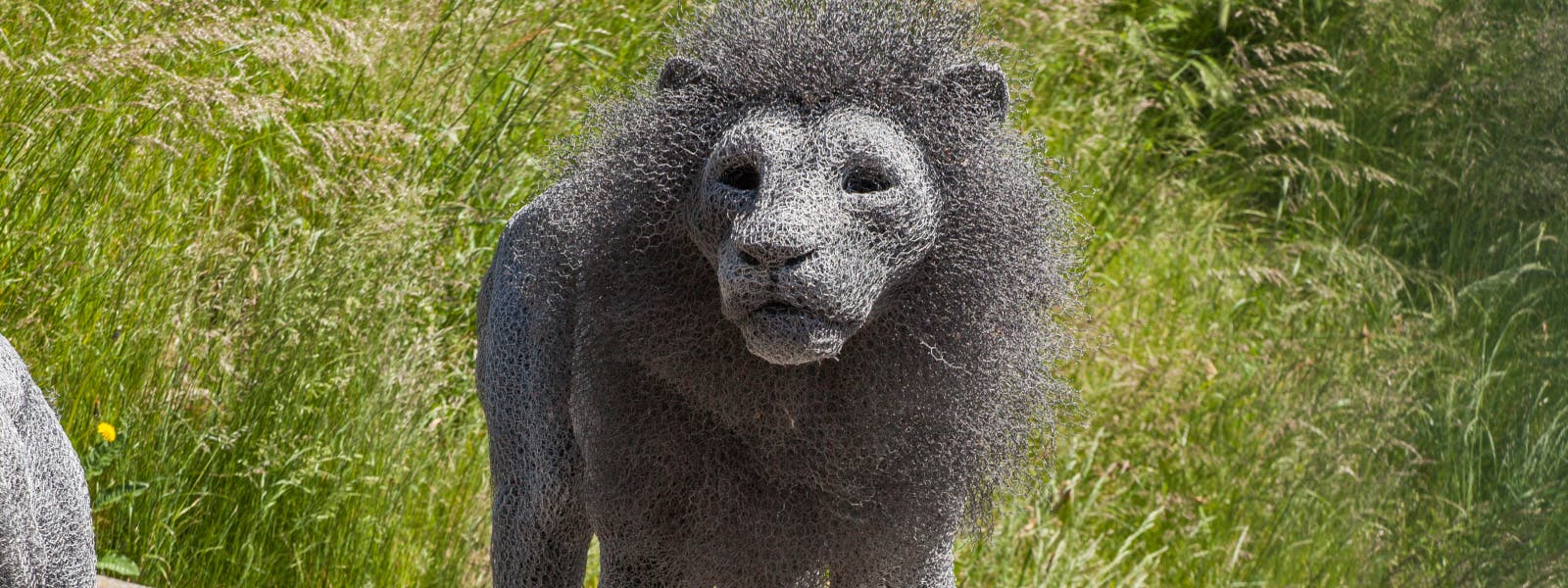
In 2010, Historic Royal Palaces commissioned artist Kendra Haste to create 13 galvanised wire sculptures for display at the Tower. These sculptures commemorate the animals held here in the Menagerie. These include a family of lions, a polar bear, an elephant and a baboon troupe – displayed near where the original animals were kept.
Listen to the podcast
The Royal Menagerie - Animals at the Tower of London
In this episode of the Historic Royal Palaces podcast, Curator Charles Farris is joined by Emma Shepley, a curator researching the Tower's Menagerie, and Dr Mishka Sinha, a historian of global history, to bring you this new and ongoing research.
They discuss what conditions were like for these animals; who cared for them; and what their presence at the Tower tells us about Britain's relationship with the wider world.
The episode contains discussion of animal cruelty, hunting, injury to people, and colonialism.
Listen on Apple Podcasts Listen on SpotifyDiscover the 'Royal Beasts' at the Tower of London

Royal Beasts Exhibition
Explore tales of the surprising animals kept at the Tower on your visit to this palace, prison and fortress.
Browse more history and stories

50 facts about the Tower of London
How many of these essential highlights do you know?

Eleanor of Castile
A dynamic and learned queen

Edward I
Hard working and effective, but ruthless and cruel
Explore what's on

- Things to see
Royal Beasts
Discover why exotic animals were kept at the Tower of London and see how they lived in the Royal Menagerie.
- Dates: Open
- Location: Tower of London
- Ticket type: Included in palace admission (Members go free)

- Tours and talks
- Events
Ghost tours
Dare you visit the Tower at night and take one of our Ghost Tours? Discover secrets of the Tower's ghosts with after-hours access.
-
Dates:
24 October to 01 November: Daily. From 08 November, every Sunday.
- Times: 19:00 - 20:00
- Location: Tower of London
- Ticket type: Separate ticket (advance booking required)

- Tours and talks
- Events
Keys Club experience
Join a Yeoman Warder for an intimate 45-minute talk inside this historic and rarely seen, invitation-only space.
-
Dates:
Mondays, Tuesdays and Thursdays
- Times: 11:00. Duration 45 minutes
- Location: Tower of London
- Ticket type: Separate ticket
Shop online

Shop Kings & Queens of England
Discover our informative and best selling range, inspired by the incredible history of the Kings and Queens of England.
From £4.99
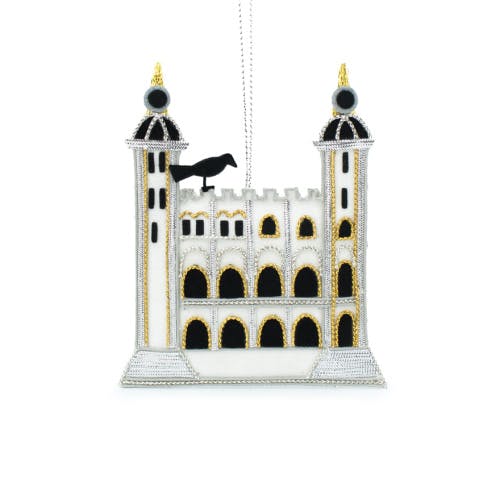
White Tower Decoration
This sparkling silver luxury White Tower hanging decoration is hand embroidered using the same metal thread work techniques used to sew royal dresses and finery in centuries past.
£13.00

Tower of London Navy Raven Sweatshirt
Inspired by the infamous ravens of the Tower of London, this sweatshirt will keep you warm on those chilly days.
£38.00