
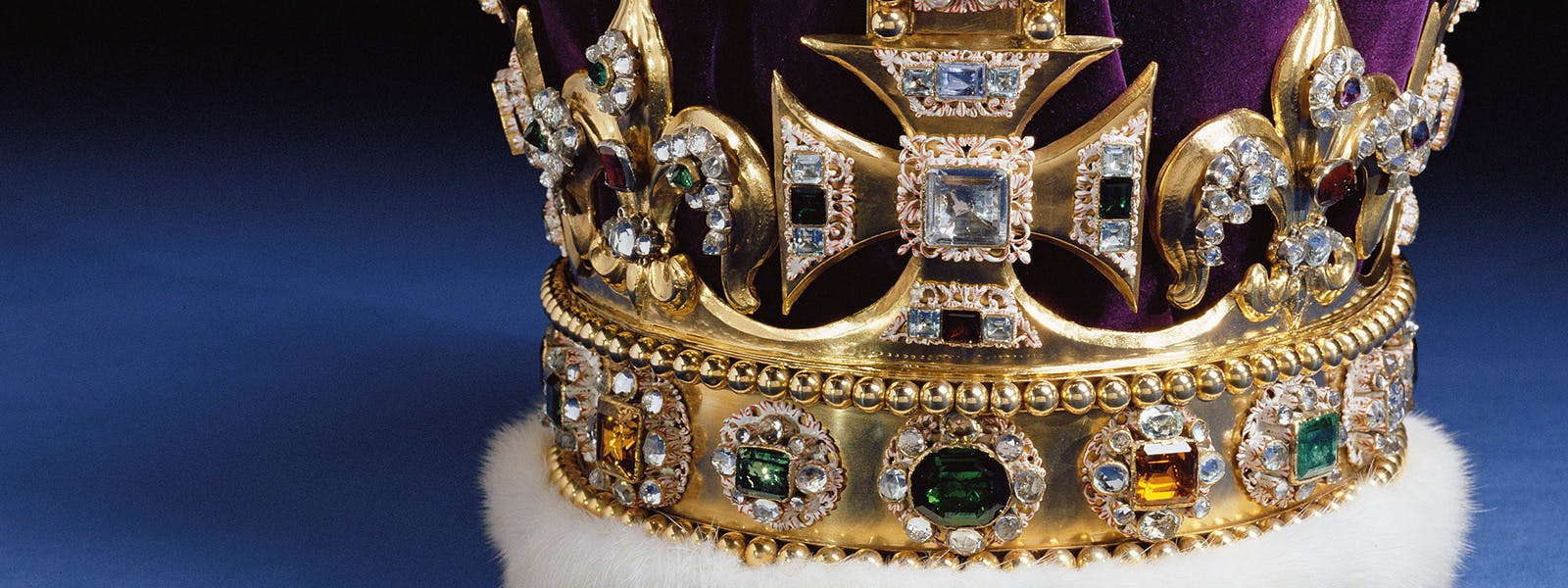
A world-famous, unique collection of sacred and ceremonial objects
What are the Crown Jewels?
The Crown Jewels are the nation’s most precious treasures, including the sacred Coronation Regalia used at the Coronations of new monarchs. Comprising more than 100 objects and over 23,000 gemstones, the Crown Jewels are priceless, being of incalculable cultural, historical, and symbolic value. They are part of the Royal Collection, held in trust by the monarch for the nation.
The Crown Jewels collection includes St Edward’s Crown, which is only used to crown a new king or queen during the coronation ceremony and the Imperial State Crown, used by the monarch at state occasions such as the State Opening of Parliament.
The Crown Jewels have been protected at the Tower of London since the 1660s, where they have attracted visitors ever since.
The Coronation Regalia
At the heart of the Crown Jewels collection are the Coronation Regalia: the sacred objects used during the coronation ceremony. These unique objects represent the powers and responsibilities of the monarch.
The Coronation Regalia were most recently used at the Coronation of King Charles III and Queen Camilla on 6 May 2023, and include the Sovereign’s Sceptre with Cross, the Sovereign’s Orb, and the Coronation Spoon.

Image: Coronation portrait of Queen Elizabeth II, 2 June 1953. The Queen wears the Imperial State Crown, 1937 and holds the Sovereign’s Sceptre with Cross, 1661 and Sovereign’s Orb, 1661. Photography by Cecil Beaton. © Victoria & Albert Museum, London
Crown Jewels Q&A: 'Are they real?'
The question most visitors ask about the Crown Jewels is, 'are they real?' Yes, they are!
The Crown Jewels have been protected by the Tower of London and its communities since the 1660s. They are a working collection used at annual state occasions like the State Opening of Parliament as well as at less frequent occasions, such as coronations.

Image: St Edward’s Crown, 1661. For past coronations St Edward’s Crown was adorned with hired stones. In 1911, King George V had the crown set permanently with semi-precious stones. Royal Collection Trust / © His Majesty King Charles III 2023 / Prudence Cuming Associates
St Edward's Crown, 1661
St Edward’s Crown is the most important and sacred of all the crowns. It is only used at the moment of crowning itself.
Key facts
- The magnificent solid gold frame weighs 2.23kg (nearly 5lbs) and is adorned with semi-precious stones.
- St Edward's Crown was made for the coronation of Charles II to replace the medieval crown melted down by parliamentarians in 1649, after the execution of Charles I.
- This lost medieval crown was said to have belonged to the 11th-century royal saint, King Edward the Confessor.
- St Edward's Crown was last used for crowning Charles III in 2023.
The Imperial State Crown, 1937
The Imperial State Crown is the crown that the monarch wears as they leave Westminster Abbey after the coronation. It is also used on other State occasions including the annual State Opening of Parliament.
Key Facts
- The crown is made of gold and set with 2,868 diamonds, 17 sapphires, 11 emeralds, 269 pearls, and 4 rubies!
- The crown contains some of the most famous jewels in the collection. These include the Black Prince's Ruby, the Stuart Sapphire, and the Cullinan II diamond.
- St Edward’s Sapphire, set in the centre of the topmost cross, is said to have been worn in a ring by St Edward the Confessor and discovered in his tomb in 1163.
- The Imperial State Crown was made for the Coronation of King George VI in 1937, replacing the crown made for Queen Victoria in 1838.
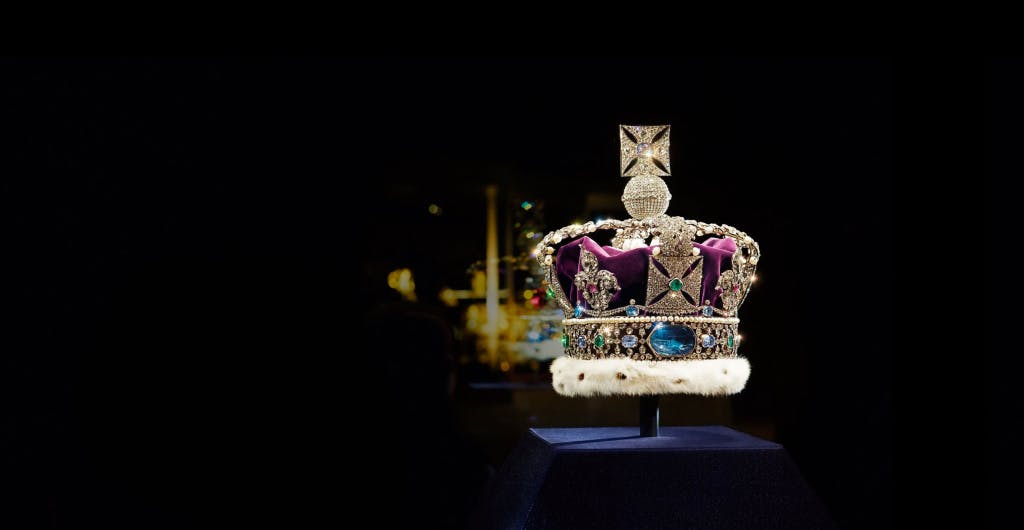
The Imperial State Crown, made for the coronation of King George VI in 1937 by Garrard and Company.
Image: The Imperial State Crown © Adam Hinton / Royal Collection Trust / © His Majesty King Charles III 2023
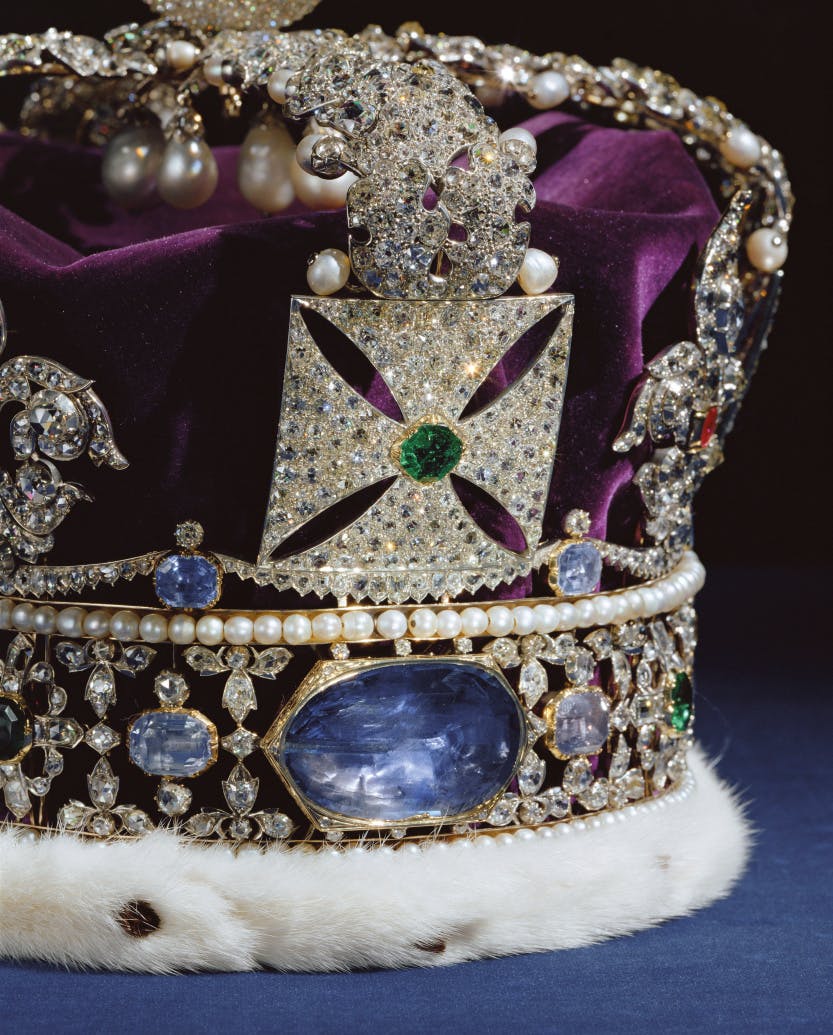
The Imperial State Crown contains some of the most famous jewels in the collection, such as the blue Stuart Sapphire, shown here.
This sapphire was reputedly smuggled out of the country by James II when he fled in 1688. It now adorns the back of the Imperial State Crown.
Image: The Imperial State Crown. Royal Collection Trust / © His Majesty King Charles III 2023
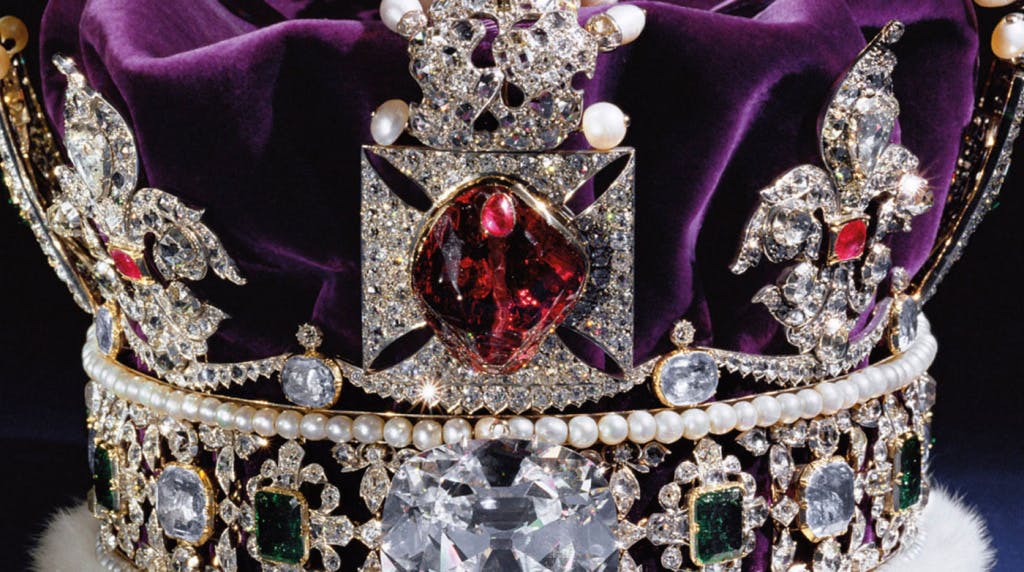
The Black Prince’s Ruby, set into the cross at the front of the crown is actually a balas or spinel, a semi-precious stone said to be the same stone owned by Pedro the Cruel, King of Castile, before he gave it to Edward, Prince of Wales (known as the Black Prince) in 1367 as a reward for helping him defeat a rival in battle.
Image: The Black Prince’s Ruby. Royal Collection Trust / © His Majesty King Charles III 2023
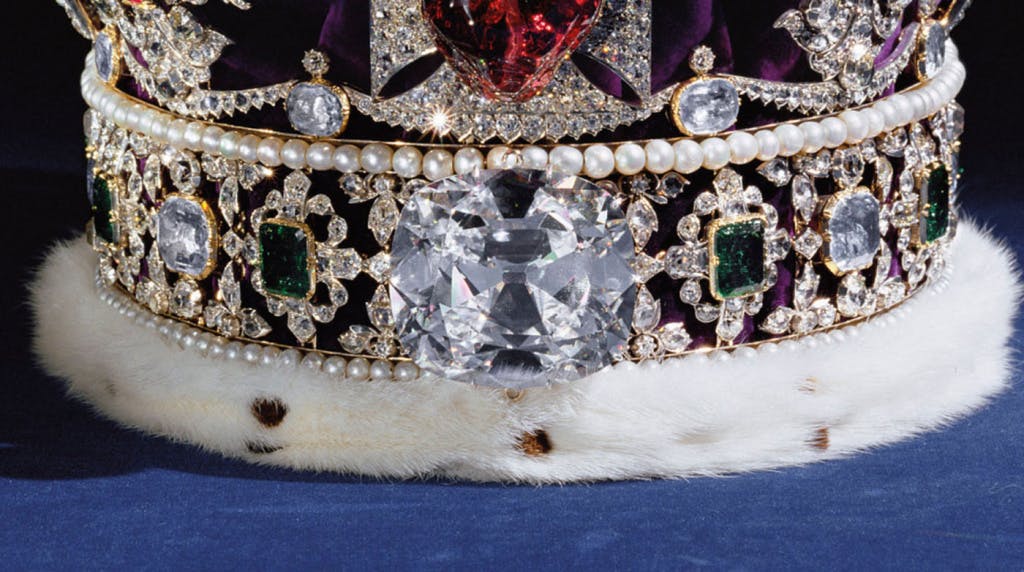
The Cullinan II diamond is set in the front band of the Imperial State Crown. It is the second largest stone to be cut from the Cullinan Diamond, the world's largest diamond.
Image: The Cullinan II diamond. Royal Collection Trust / © His Majesty King Charles III 2023

Image: The Sovereign’s Sceptre with Cross, 1661, set with the Cullinan I diamond. At 530.2 carats it is the largest colourless cut diamond in the world. Made for the coronation of King Charles II in 1661. Royal Collection Trust / © His Majesty King Charles III 2023
The Sovereign's Sceptre with Cross, 1661
The Sovereign’s Sceptre with Cross has been used at every coronation since Charles II’s in 1661. It was transformed in 1910 for George V by the addition of the spectacular Cullinan I diamond. At 530.2 carats, it is the largest colourless cut diamond in the world.
The Cullinan Diamond was discovered in 1905, in modern-day South Africa. On 26 January 1905, Frederick Wells, the mine's Surface Manager, was alerted to a shiny object glinting in the wall of the mine. Wells prized out an enormous diamond, named after the mine's chairman, Sir Thomas Cullinan.
Key Facts
- At 3106 carats, The Cullinan Diamond remains the largest gem-quality uncut diamond ever found.
- A replica stone, guarded by detectives was sent to the mining company's London sales agent by ship, while the real stone, insured, was sent by ordinary parcel post. Both arrived safely.
- The Transvaal government purchased the stone and gifted it to King Edward VII. The gift symbolised the healing relationship between Britain and South Africa following the South African Wars (sometimes called the Anglo-Boer Wars), 1899-1902.
- The huge uncut stone was cut to create nine major stones and 96 smaller brilliants in all.
- It took three polishers working 14-hour days, 8 months to complete the nine largest stones.
- The two largest stones were named the Cullinan I and the Cullinan II. They are set in the Sovereign’s Sceptre with Cross, 1661, and the front band of the Imperial State Crown, 1937.
Sovereign’s Orb, 1661
During the coronation the monarch is presented with objects representing their powers and responsibilities. This is called the investiture. Among the objects is the Sovereign’s Orb, a golden globe surmounted by a cross. It reminds the monarch that their power is derived from God.
In 1689 Queen Mary II was crowned joint sovereign with her husband King William III. As joint monarch Mary II required her own regalia for their coronation, rather than using the traditional consort’s regalia.
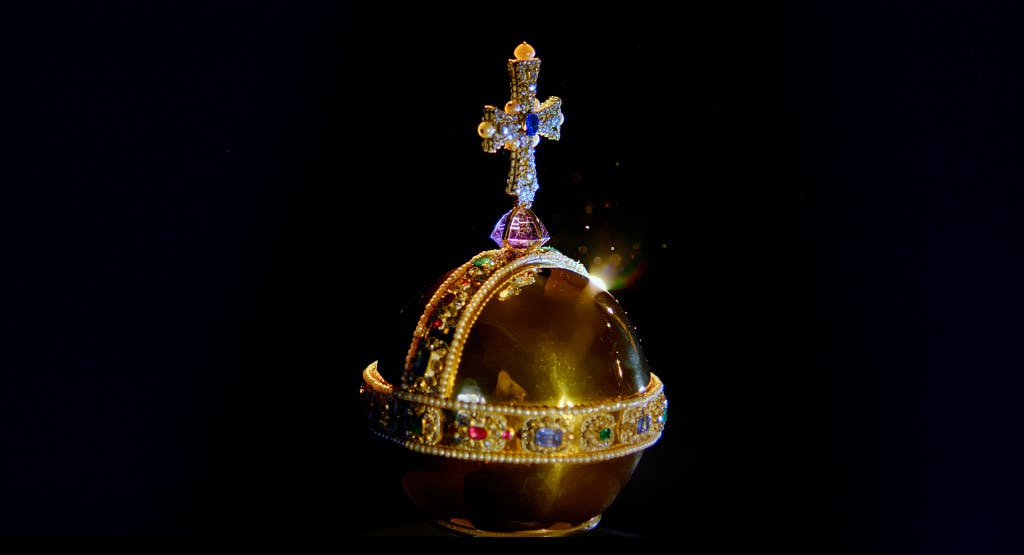
Image: The Sovereign's Orb, 1661, part of the Coronation Regalia. Taken from Atlantic Productions/Royal Collection Trust / © His Majesty King Charles III 2023

Image: The Crown of Queen Elizabeth the Queen Mother, 1937. It is set with the Koh-i-Noor Diamond. Royal Collection Trust / © His Majesty King Charles III 2023
The Koh-i-Noor
The Koh-i-Noor diamond is one of the most famous diamonds in the world. Probably originating from the Golconda mines in central southern India, the diamond has had a turbulent history. A symbol of conquest, the Koh-i-Noor has had many previous owners, including Mughal Emperors, Shahs of Iran, Emirs of Afghanistan, and Sikh Maharajahs.
The East India Company took the jewel from deposed ten-year-old Maharajah Duleep Singh in 1849, as a condition of the Treaty of Lahore. This marked the end of the Anglo-Sikh Wars in the Punjab, in present day northern India and eastern Pakistan. The Treaty specified that the jewel be surrendered to Queen Victoria.
The Koh-i-Noor diamond weighs 105.6 carats. It was once much larger but was re-cut in 1852 to improve its brilliance and conform to contemporary European tastes. Opposing legends have maintained that the diamond is both lucky and unlucky. More recent tradition asserts it would bring misfortune if worn by a man. The Koh-i-Noor is now set in the Crown of Queen Elizabeth the Queen Mother, 1937.
The Coronation Spoon
One of the oldest objects in the Crown Jewels is the 12th-century Coronation Spoon. It is used for anointing the sovereign with holy oil, the most sacred part of the coronation ceremony.
The Coronation Spoon survived Parliament's destruction of the Crown Jewels in 1649 because it was bought by a man called Clement Kynnersley. Kynnersley had been an official of the royal wardrobe of Charles I, and was one of the commissioners who organised the sale of the late king’s goods. After the Restoration in 1660 Kynnersley returned the Coronation Spoon to Charles II, no doubt hoping to win back royal favour.

Image: The 12th-century Coronation Spoon, shown here with the Ampulla, 1661, used for anointing the monarch with holy oil. Royal Collection Trust / © His Majesty King Charles III 2023
Crown Jewels Q&A
'Who owns the Crown Jewels?'
The Crown Jewels are held in trust by the king or queen for the nation. They are passed to the next monarch on their accession (when they become king or queen).
'Where are the Crown Jewels kept?'
The Crown Jewels are kept under armed guard in the Jewel House at the Tower of London. Every year visitors come from all over the world to see them.
'How old are the Crown Jewels?'
Most of the collection dates from shortly after the Restoration of the Monarchy in 1660. They were created on the orders of King Charles II for his Coronation in 1661.
There are a few older items in the collection including the Coronation Spoon, which dates to the 12th century. More recent additions to the collection include the Imperial State Crown was made for the Coronation of King George VI in 1937, replacing the crown made for Queen Victoria in 1838.
'What happened to the Crown Jewels in 1649?'
Until 1649 the Coronation Regalia were kept at Westminster Abbey. In 1649, during the English Civil War, King Charles I was executed, and parliament decided to sell off the late King's goods. This was an early act of the republic, of which Oliver Cromwell would become Lord Protector in 1653.
Parliament had other plans for the Coronation Regalia. Hoping to abolish the monarchy forever they could not risk the sacred regalia getting into the wrong hands. They were brought to the Tower of London and destroyed. The stones were sold and the gold frames were melted down in the Tower Mint and turned into coins stamped 'Commonwealth of England'.
In 1660 monarchy was restored and Charles II ordered new regalia for his coronation in 1661. These objects still make up a large proportion of the Crown Jewels collection, which has been protected by the Tower of London and its people ever since.
'The Crown Jewels stolen!'
Thomas Blood’s theft of the Crown Jewels in 1671
In 1671 Colonel Thomas Blood attempted to steal the Crown Jewels. Blood was a soldier, spy, and adventurer who had once fought for the king in the English Civil War, but later became involved in various plots, including one to seize Dublin Castle.
On the morning of 9 May 1671 Colonel Blood and his accomplices fooled Talbot Edwards, the aging Jewel House Keeper, into showing them the Crown Jewels. Security at this time was lax and for a fee you could even handle the Crown Jewels.
The men viciously attacked Edwards and seized the Orb, the Imperial State Crown, and the Sovereign's Sceptre with Cross. Fortunately, the men panicked and fled after Edwards’ son arrived home unexpectedly and his daughter raised the alarm. After a desperate dash to their horses, and exchanging fire with guards, they were eventually all captured.
Amazingly, Blood escaped punishment. After being granted an audience with King Charles II, Blood convinced the king he deserved a second chance. Blood was not only pardoned for all his previous crimes but was given a grant of Irish lands worth £500 each year. This surely ranks as one of the most remarkable events in the history of the Crown Jewels.
A History of Coronations
Special podcast episode
Join us for a whistle-stop tour of the History of Coronations. Curators Charles Farris, Alden Gregory and Lee Prosser will lead you on a merry dance through time, from medieval pre-coronation baths, to a man rolling down the steps at Queen Victoria's coronation. There's never a dull moment!
More episodesPodcast transcript
Watch The Crown Jewels Thief: Colonel Blood
Listen to Yeoman Warder Darren Hardy tell the fascinating story of how Blood and his companions managed to outwit the Jewel House Keeper.
The audacious Colonel Blood was eventually captured and presented to King Charles II – but watch and find out the very unexpected twist in this tale.
Watch on YouTubeThis content is hosted on YouTube
This content may be using cookies and other technologies for which we need your consent before loading. To view the content, you need to enable cookies for "Targeting Cookies & Other Technologies".
Video Transcript of The Crown Jewels Thief: Colonel Blood
Follow along with an interactive transcript of The Crown Jewels Thief: Colonel Blood on YouTube. A link to open the transcript can be found in the description.
Discover more Tower History

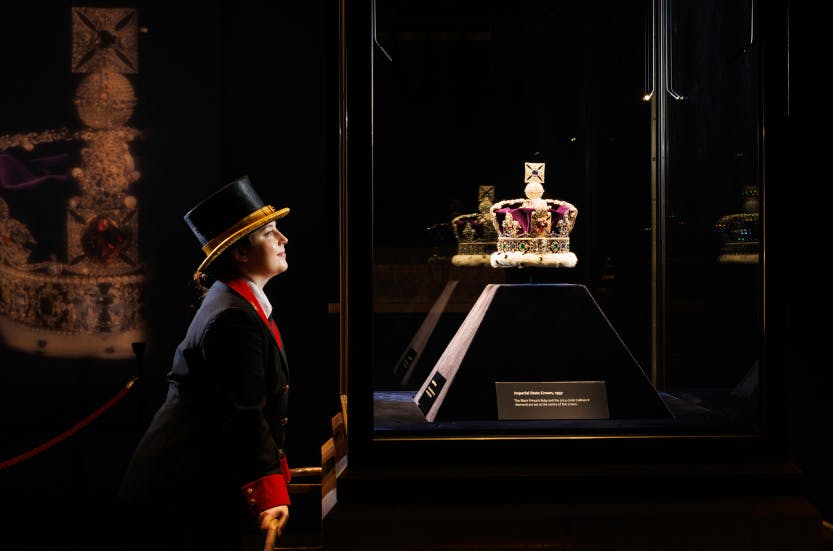
Jewels on Display
A short history of the Jewel House at the Tower
Tom Drysdale, Archivist and Curator of Architectural Drawings at the Tower of London, explores the fascinating history of the Jewel House at the Tower.
Browse more history and stories

50 facts about the Tower of London
How many of these essential highlights do you know?

Elizabeth II at our palaces
Elizabeth II had a deep connection to the Tower of London and the other five palaces in our care

The Tower of London and the Second World War
Life at the Tower of London during the Second World War
Explore what's on

- Tours and talks
- Events
Ghost tours
Dare you visit the Tower at night and take one of our Ghost Tours? Discover secrets of the Tower's ghosts with after-hours access.
-
Dates:
24 October to 01 November: Daily. From 08 November, every Sunday.
- Times: 19:00 - 20:00
- Location: Tower of London
- Ticket type: Separate ticket (advance booking required)

- Tours and talks
- Events
Keys Club experience
Join a Yeoman Warder for an intimate 45-minute talk inside this historic and rarely seen, invitation-only space.
-
Dates:
Mondays, Tuesdays and Thursdays
- Times: 11:00. Duration 45 minutes
- Location: Tower of London
- Ticket type: Separate ticket

- Events
- Tours and talks
Tower of London Opening Ceremony experience
Experience a unique and exclusive opportunity to enter the Tower of London before it opens and watch the Opening Ceremony.
-
Dates:
Daily until 01 November 2026
- Times: Sunday and Monday: 09:45, Tuesday to Saturday 08:45.
- Location: Tower of London
- Ticket type: Special Opening Ceremony experience ticket (includes Tower admission, advanced booking only)
Shop online
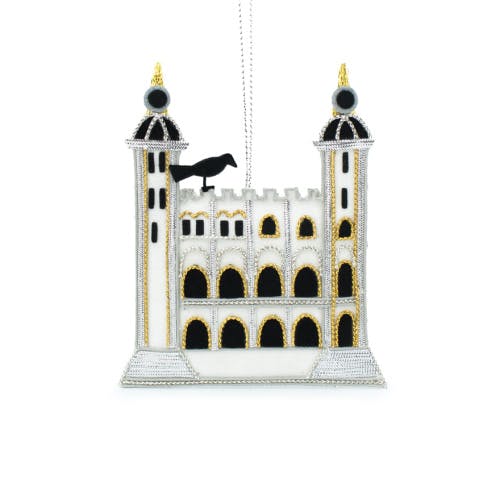
White Tower Decoration
This sparkling silver luxury White Tower hanging decoration is hand embroidered using the same metal thread work techniques used to sew royal dresses and finery in centuries past.
£13.00

Tower of London Navy Raven Sweatshirt
Inspired by the infamous ravens of the Tower of London, this sweatshirt will keep you warm on those chilly days.
£38.00

Shop Ravens
It is said that if the ravens were ever to leave the Tower of London then the kingdom will fall. Naturally, to preserve the kingdom, at least six ravens are kept to protect the Tower.
From £2.50